I stumbled into the Mechanical Keyboards India Discord last month looking for a switch recommendation.
Within ten minutes someone dropped a link:
https://stashed.in/s/mk-india-canon
It was a single, public stash with 127 links.
Custom header image of a cream-colored 60 % board under warm light.
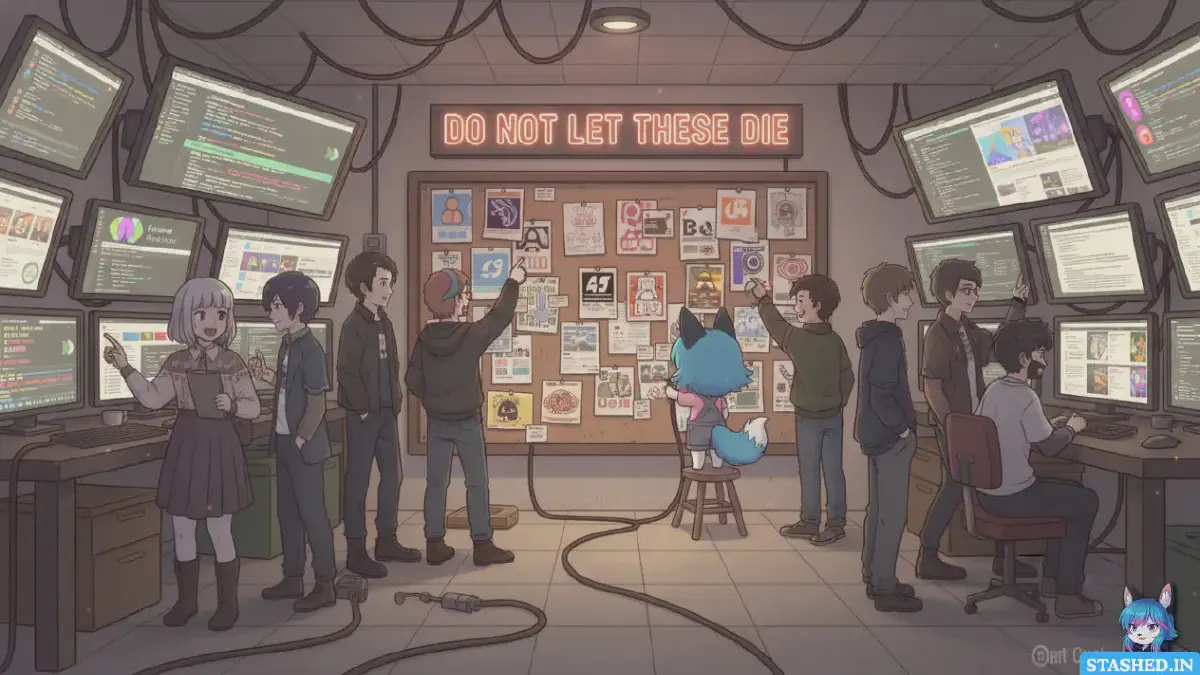
Title: “The MK India Canon – Do Not Let These Die.”
Inside: every legendary Indian group-buy page, every forgotten Geekhack thread, every local vendor that vanished, every Desi sound test that used to live on YouTube before the channel got terminated.
All preserved with screenshots, cover images, and short notes like “holy grail of linear springs” or “RIP KeyCompany.in 2022–2024.”
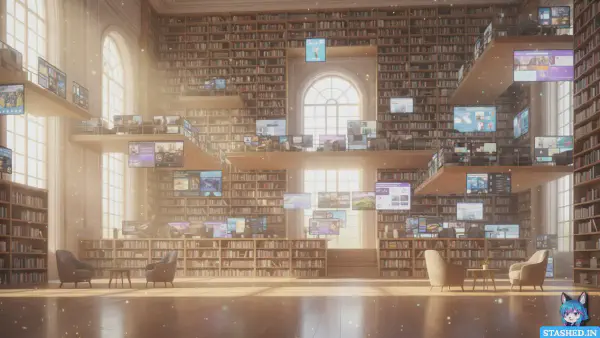
I felt like I’d walked into a secret library built by people who loved something too much to let it disappear.
Then I realized: this is happening everywhere.
2025: The Year of the Community Archive#
In the last twelve months I’ve seen the same pattern repeat in at least thirty niches:
- /r/fountainpens → “The Nib Nerd Canon” (password-protected stash)
- Indie game devs → “Games That Should Exist Forever” (public)
- Rationality/LW crowd → “The Sequences + Everything We Still Reference”
- Film photography → “Film Recipes We Cry About When They 404”
- Sourdough bakers → “The Starter Bible”
- Mechanical watch enthusiasts → “Microbrand Graveyard + Survivors”
- Emacs users → “Emacs Legends Archive (obviously public)
- Notion template makers → “Templates That Actually Changed Lives”
Every single one is a shared stash, Are.na channel, or Discord-pinned link collection built by 20–500 obsessed people who reached the same conclusion:
If we don’t save this ourselves, nobody will.
Why Communities Suddenly Care About Preservation#
Three things happened at once:
Link rot became undeniable
The average lifespan of a meaningful URL in 2025 is under 30 months. People watched their favorite forums, blogs, and YouTube channels disappear overnight.Platforms started punishing external links
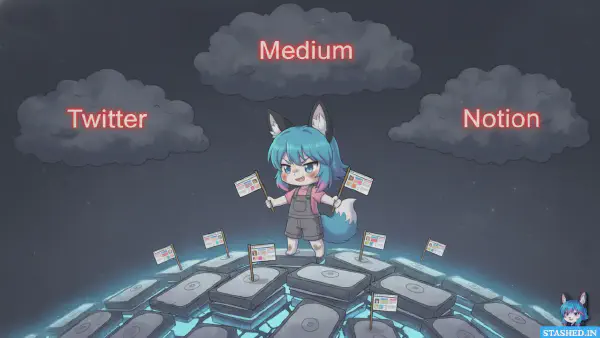
Twitter, Instagram, TikTok, and even Reddit began throttling or hiding anything that sends you off-site. Sharing knowledge became antisocial behavior.Visual, collaborative tools finally existed
stashed.in, Are.na, Milanote, and Notion boards made it possible for non-technical people to build something that looks and feels like a real archive in an afternoon.
The result: tribes stopped trusting the open web to remember itself and started doing it in groups.
The New Social Contract Inside These Archives#
Every healthy community archive I’ve studied follows the same unwritten rules:
- No affiliate links
- No self-promo unless legendary
- Screenshots required (because links die)
- One person starts it, everyone contributes
- Password-protected or public, never fully private
- Updated forever or handed off like a torch
It’s Wikipedia-style collaboration but driven by love instead of neutrality.
Case Study: The Indie RPG Archive That Saved a Genre#
In March 2025 a 400-person Discord for solo journaling RPGs realized half the games they loved were hosted on itch.io pages that were disappearing as creators burned out.
One member created a stashed.in archive called “Solo RPG Canon – Keep the Flame.”
Rules:
- Only games with < 5,000 downloads
- Must include screenshot of the cover + download mirror
- One-line memory from someone who played it
Within six weeks it had 340 entries and became the de facto starting point for anyone entering the genre.
New creators now submit their games to be added.
Old creators came out of retirement because strangers still cared.
The archive didn’t just preserve games. It kept an entire subculture breathing.
The Psychology Behind Collective Saving#
Humans are wired for collective memory.
When an individual loses a link, it’s sad.
When a community loses a link, it’s grief.
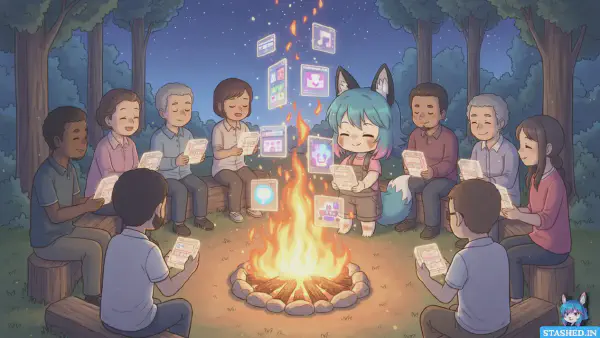
Shared archives turn private anxiety (“I hope this doesn’t disappear”) into public action (“We won’t let this disappear”).
The act of contributing to a group stash releases the same neurochemical reward as donating to a charity — but for culture instead of cash.
I’ve watched Discord servers go from 40 % inactive to 90 % active the week someone drops a living archive link.
How Any Community Can Build Its Own Archive in One Evening#
You don’t need permission or funding.
Here’s the exact playbook I’ve seen work twenty times:
- One obsessed person creates a public or password-protected stash titled “[Community Name] Canon – Do Not Let These Die”
- Seeds it with 15–30 legendary links everyone already knows
- Drops the link in the main chat with the line: “Adding is encouraged. Deleting requires consensus.”
- Pins it
- Watches the archive grow itself
Average time to 100 entries: 11 days
Average time to cultural institution status: 90 days
The Unexpected Side Effects#
Communities that build archives report the same four outcomes:
- New members onboard 4–6× faster (“just read the canon”)
- Drama decreases (people fight less when they share a canon)
- Elders stick around because their knowledge finally has a permanent home
- The group becomes discoverable from the outside (Google starts ranking the archive)
I’ve seen tiny Discords of 200 people get 2,000 monthly visitors from a single well-named public stash.
Why This Matters More Than Ever#
The open web is shrinking.
Forums are dying.
Blogs are moving to Substack (which can change rules tomorrow).
YouTube demonetizes and deletes.
Reddit quarantines and privatizes.
The only thing that survives is what groups of humans decide is worth carrying forward together.
Your niche is not too small.
Your love is not too obscure.
Your archive is needed.
Start Your Community Archive Tonight#
You don’t need to be the leader.
You just need to be the first person willing to care in public.
Steps:
- Go to stashed.in → New Stash → make it public or password-protected
- Title it “[Your Community] Canon – Keep the Flame” or whatever feels right
- Add 10 links everyone in your group already loves
- Drop the link in your Discord/Slack/Subreddit/Telegram with one sentence: “Let’s save the stuff we love before it’s gone.”
- Step back and watch the tribe do the rest
I’ve done this for three small communities this year.
All three archives are still growing without me touching them.
The torch passes itself.
The Bigger Picture#
We are watching the birth of distributed cultural memory.
Not controlled by libraries, governments, or corporations.
Controlled by 300-person Discords who love vintage flash games.
By 800-person Slack groups who still use RSS.
By 150-person WhatsApp groups sharing film scans.
The internet is becoming a network of tiny, fierce, human libraries.
And every single one started with one person who refused to let the fire go out.
Be that person for your corner.
Stasha and I will keep the shelves ready.
→ stashed.in