
My Instagram feed showed me the same reel three times yesterday. Not similar reels. The exact same one. The algorithm had decided, in its infinite wisdom, that I needed to see a 15-second clip of someone making a sandwich using methods I will never replicate.
I closed the app and opened Twitter. The first thing I saw was a rage-bait post about a topic I don’t care about, algorithmically served because apparently, engagement metrics have decided this is what I want. I don’t want it. I never wanted it.
That’s when I did something I haven’t done in years. I opened my browser, typed in a specific URL, and went directly to a website I actually wanted to read. No algorithm. No recommendation engine. No “you might also like.” Just me, choosing what to consume.
It felt revolutionary. Which is absurd, because that’s how the entire internet worked for its first two decades.
Something is shifting. People are tired of being fed content by machines that don’t understand them. They’re tired of infinite scroll, endless recommendations, and the constant feeling that they’re not in control of their own digital experience. They’re rediscovering something we lost somewhere along the way: the joy of curating your own corner of the internet.
Welcome to the return of personal web curation. It’s not nostalgia. It’s necessity.
Why We Stopped Curating in the First Place#
Let’s rewind to understand how we got here. In the early 2000s, personal web curation was just called “using the internet.” You had bookmarks. You had RSS feeds. You had Delicious and StumbleUpon. You followed specific blogs and websites because you liked what they published.
The internet felt vast but navigable. You were an explorer, not a passive consumer.
Then the algorithms arrived, and they promised something seductive: you’ll never miss anything important. We’ll show you exactly what you want to see, even before you know you want to see it.
For a while, it worked. Facebook’s feed felt magical when it actually showed you updates from friends. YouTube recommendations introduced you to creators you genuinely loved. Twitter’s timeline was chronological chaos, but it was your chaos.
But algorithms are optimized for engagement, not satisfaction. Research from the American Psychological Association shows that algorithmic feeds increase time spent on platforms while simultaneously decreasing user satisfaction and wellbeing.
We kept scrolling, but we stopped enjoying it. The algorithm knew how to keep us watching, but it had no idea how to make us happy.
And slowly, quietly, we gave up the practice of curation. Why maintain a reading list when the algorithm will just serve you content? Why bookmark websites when recommendations will find you new ones? Why be intentional about what you consume when infinite content is being pushed at you constantly?
We traded agency for convenience. And now we’re realizing it wasn’t worth it.
The Algorithm Fatigue Crisis#
Let’s talk about what algorithm fatigue actually feels like, because if you’re reading this, you’ve probably experienced it.
It’s opening TikTok to watch one specific thing and emerging 45 minutes later having seen 200 videos you didn’t choose and can barely remember. It’s the exhaustion of being served content that’s designed to provoke reaction rather than provide value.
It’s the creeping awareness that you’re not discovering things anymore. You’re being fed things. And there’s a massive difference between those two experiences.
Discovery feels active. You’re exploring, choosing, finding gems in unexpected places. Being fed feels passive. You’re a battery being charged with dopamine hits, optimized for maximum retention and minimum fulfillment.
The problem isn’t just that algorithmic content is low quality (though often it is). The problem is that it removes your agency. You’re not steering your own experience anymore. You’re a passenger in a car that’s taking you to destinations you never asked to visit.
And people are getting exhausted. Not just tired, but fundamentally drained by the experience of constant algorithmic mediation between them and the content they actually want.
What Personal Web Curation Actually Means Today#
So what does it mean to curate your own web experience in 2025? It’s not about going back to 2005 and pretending social media doesn’t exist. It’s about reclaiming intentionality in how you consume content.
Personal web curation today means making active choices about what you see instead of accepting whatever the algorithm serves you. It means building your own collections, following your own interests, and creating pathways through the internet that actually reflect your values and goals.
It means treating the internet like a library you get to organize instead of a television where someone else controls the remote.
The tools look different than they did twenty years ago, but the principle is the same: you decide what’s worth your attention. Not an engagement algorithm. Not a recommendation engine. You.
This isn’t about perfectionism or creating some pristine digital environment. It’s about the basic human need to feel in control of your own experience. To open something and know why you’re there. To find something valuable and be able to return to it later. To share discoveries with people you care about without a platform deciding who gets to see what.
The New Tools of Curation#
The resurrection of personal web curation is being powered by a new generation of tools that understand what the algorithmic era got wrong.
RSS readers are experiencing a revival. People are rediscovering the simple pleasure of a chronological feed that shows you everything from sources you chose, in the order it was published, with no algorithm deciding what’s important.
Newsletter platforms like Substack have exploded because they offer direct relationships between creators and readers, no algorithmic intermediary required. You subscribe to a writer, you get their writing. Revolutionary.
But the most interesting development is in how we’re rethinking link management and content organization. Browser bookmarks were always limited. Folder hierarchies are clunky. But we need better ways to save, organize, and share the things we find valuable.
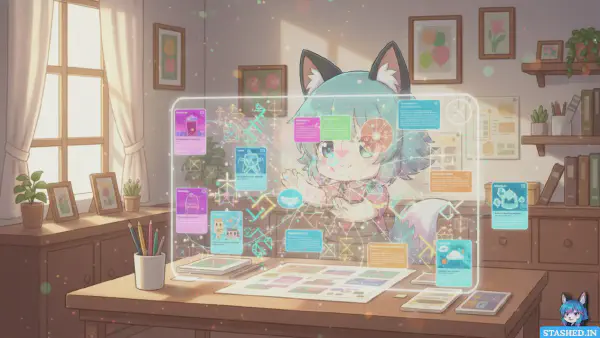
This is where visual curation platforms become genuinely useful. Instead of treating every link as identical text in a folder, what if you could create visual collections that actually convey meaning?
Think about how Pinterest changed the way people saved visual inspiration. You could create boards that told a story. The images themselves communicated what the collection was about. You could share entire boards with others and actually convey your vision.
Now imagine that same approach, but for any link you want to save. Articles, tools, research, resources, videos, portfolios. Anything you find valuable on the internet, organized in visual collections that make sense when you come back to them.
That’s what I built stashed.in to do. Create stashes with image headers that actually tell you what’s inside. Make some public to share your discoveries. Keep others private for personal reference. Password-protect specific stashes when you want to share resources with a team or friends without making them fully public.
It’s curation that respects both organization and aesthetics. Both utility and shareability. Both personal use and social discovery, without any algorithm deciding what you should see.
Why Visual Curation Matters#
Here’s something I learned building stashed.in: how you organize information dramatically affects whether you actually use it.
Text-based bookmark lists fail because they all look the same. Every folder is identical. Every link is just blue underlined text. Your brain has no visual hooks to remember what anything is or why it mattered.
But visual curation works with how human memory actually functions. Studies on memory encoding show that we remember visual information far better than text alone. An image header doesn’t just look nice. It creates a mental anchor that helps you remember what a collection is about and why you created it.
When you create a stash for design inspiration and give it a header image that captures the aesthetic you’re going for, you’re not just organizing links. You’re creating a visual memory that makes that collection actually usable three months from now.
This matters because the goal of curation isn’t just to save things. It’s to create collections you’ll actually return to and use. Visual curation dramatically increases the likelihood that saved content becomes useful instead of forgotten.
The Social Aspect We Actually Need#
One of the best parts of the early web was discovery through other people. Not algorithmic recommendations, but actual humans sharing things they found interesting.
Delicious had this. StumbleUpon had this. Early Twitter had this before the algorithm took over. You could see what other people were bookmarking and discover amazing corners of the internet you never would have found on your own.
We lost that when everything became algorithmic and engagement-driven. The social web stopped being about sharing discoveries and started being about maximizing views and reactions.
But people miss genuine discovery. They miss finding something valuable because someone they trust thought it was worth sharing, not because an algorithm calculated it would maximize engagement.
The future of personal web curation has to include this social element, but done right. Not “viral” sharing where everyone sees everything. Not algorithmic amplification that rewards controversy. Just the simple ability to say “here are resources I found valuable” and share them with people who might care.
That’s why stashed.in lets you make stashes public. Not because everything should be public, but because sometimes you curate a collection that deserves to be shared. Design resources for aspiring UX designers. Research papers on a specific topic. Tools for indie developers. Recipes that actually work.
Public stashes become discoverable resources that exist outside the algorithmic feed. They’re not trying to go viral. They’re just there for people who need them.
What Happens When You Take Control#
When you shift from algorithmic consumption to intentional curation, something interesting happens to your relationship with the internet.
You spend less time online, but the time you spend feels more valuable. You’re not scrolling hoping to find something interesting. You’re going to places you know have value and engaging with content you chose.
Your stress levels drop. The constant low-grade anxiety of infinite scroll starts to fade. You’re not being bombarded with content designed to provoke reaction. You’re consuming information at your own pace, on your own terms.
Your work improves. Instead of relying on your memory or hoping the algorithm will resurface that article you saw last week, you have organized collections of resources you can actually reference when you need them.
You share better content. Instead of retweeting whatever crossed your feed in the last ten minutes, you’re sharing curated collections that represent genuine thought and effort. People notice the difference.
Most importantly, you remember why you liked the internet in the first place. Not as an attention-extraction machine, but as a tool for learning, creating, and connecting with ideas and people that matter to you.
The Practical Steps to Start Curating#
So how do you actually start taking control of your web experience? You don’t need to quit social media or completely overhaul your digital life overnight. Start with small, intentional changes.
First, audit your current information diet. What are you actually consuming online, and how much of it do you choose versus how much is algorithmically served? The answer might be uncomfortable, but it’s important to know where you’re starting.
Second, identify the sources you genuinely value. Which websites do you always enjoy reading? Which creators consistently produce content that helps you? Which newsletters do you actually open? These are your foundation.
Third, create systems that match your actual behavior. If you read articles on your phone during lunch breaks, your curation system needs to work on mobile. If you research projects on weekends, you need collections that are easy to build and reference during focused work time.
Fourth, be ruthless about removing noise. Unfollow accounts that don’t add value. Unsubscribe from newsletters you don’t read. Delete bookmark folders you haven’t opened in six months. Less clutter means more clarity.
Finally, experiment with tools that support curation instead of passive consumption. RSS readers for following specific sources. Read-it-later apps for articles you actually want to read. Visual curation platforms for organizing resources by project or interest.
The goal isn’t to create a perfect system. It’s to shift from passive consumption to active choice. To spend more time with content that matters and less time with content that doesn’t.
Why This Matters Beyond Personal Productivity#
The revival of personal web curation isn’t just about individual productivity or digital minimalism. It’s about reclaiming a version of the internet that felt more human.
When everyone curates their own experience, the internet becomes less homogeneous. We’re not all seeing the same algorithmically-boosted content. We’re not all trapped in the same outrage cycles. We’re exploring different corners, following different interests, building different collections.
This diversity of consumption creates a healthier information ecosystem. Ideas spread because people genuinely found them valuable, not because they were optimized for engagement metrics. Discovery happens through human connection, not algorithmic recommendation.
It also creates a internet that respects human agency. You’re not just a data point being optimized for ad revenue. You’re a person making choices about what deserves your attention and mental energy.
The platforms won’t make this shift on their own. Algorithmic feeds are too profitable. Engagement optimization is too central to their business models. Change has to come from individuals deciding they want something different.
And increasingly, that’s exactly what’s happening. People are building personal wikis. They’re maintaining curated link collections. They’re subscribing to newsletters and RSS feeds. They’re choosing what to see instead of accepting what they’re shown.
It’s not nostalgia for the old internet. It’s a recognition that we gave up something valuable, and we want it back.
The Internet We’re Building Together#
I built stashed.in because I was tired of losing track of valuable resources in a sea of browser bookmarks and algorithmic feeds. I wanted a way to organize links that actually worked, that looked good, that I could share when it made sense and keep private when it didn’t.
But more than that, I wanted to contribute to this shift toward intentional curation. To create a tool that respects human choice and supports the way people actually want to use the internet.
Every stash someone creates is a small act of curation. A decision about what’s worth saving and how to organize it. A rejection of the idea that algorithms should control what we see and when we see it.
Collectively, these small acts create a different kind of internet. One where valuable resources get organized and shared because they’re genuinely useful, not because they’re engineered to go viral. Where you can find collections curated by real people with real expertise, not just algorithmically-generated recommendations.
Where the web feels a little more like a library and a little less like a slot machine.
What Comes Next#
The future of personal web curation is already being written by people who are tired of algorithmic feeds and infinite scroll. People who want to feel in control of their digital experience again.
The tools will keep getting better. More visual, more intuitive, more respectful of how humans actually want to organize and discover information. The community will grow as more people realize they don’t have to accept whatever the algorithm serves them.
But the core principle will remain simple: you get to choose what deserves your attention. You get to organize what you find valuable. You get to share discoveries with people who might care.
This isn’t about perfection or creating some pristine digital utopia. It’s about the basic act of being intentional with your time and attention online. About treating the internet as a tool you control instead of a force that controls you.
The algorithm will still be there, ready to serve you content if you want it. But increasingly, people are discovering they don’t want it. They want something different. Something more human.
They want to curate their own experience. And for the first time in years, the tools exist to actually do it.
Start small. Create one collection of resources you actually use. Share one stash with people who might find it valuable. Take one corner of your digital life back from the algorithm.
You might be surprised how good it feels to be in control again.