I stopped writing permanent notes in 2023.
Not because I became dumber. Because I realized 95 % of the value I get from the internet already lives at a URL.
The perfect explanation of Bayesian thinking? Someone wrote it better than I ever will.
The ultimate Notion-to-Obsidian migration guide? Exists.
The indie-hacker revenue teardown that made me rethink pricing? Still online, still free.
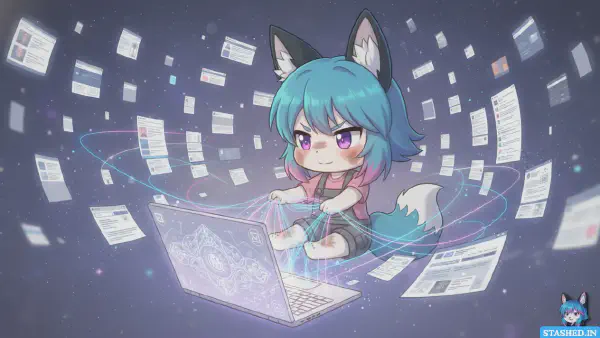
My job isn’t to rewrite the internet in my own words. My job is to find the best existing atoms and wire them together so I can retrieve them when I need them.
Everything else is ego.
Why We’re All Building the Wrong Second Brain#
Walk into any PKM community in 2025 and you’ll see the same pattern:
- Discover a cool article
- Copy the text
- Paste into Obsidian/Roam/Logseq/Capacities
- Highlight in yellow
- Write a “literature note”
- Make a MOC
- Add twelve bidirectional links
- Spend 40 minutes tweaking folder structure and YAML
Total time invested: 52 minutes
Chance you’ll ever open your own note again: 4 %
We turned knowledge management into knowledge transcription.
Meanwhile the original article still exists, still gets updated by its author, still has comments and discussion attached, and still ranks in Google. We just made a worse, static, isolated copy because some guy on YouTube said “progressive summarization” is the way.
This isn’t a second brain. It’s a mausoleum.
The Link Is the Atomic Unit (Always Has Been)#
Think about the last ten times you actually learned something life-changing.
How did you find it?
- A friend sent a link
- You saw a tweet with a link
- You stumbled on a blog post that linked to another blog post
- You opened a newsletter and clicked
Never once did someone send you a zipped Obsidian vault.
The link is still the most shareable, most durable, most context-rich unit of knowledge we have. A single URL can contain text, video, images, comments, updates, and an entire community discussing it.
Yet every major PKM tool treats links as second-class citizens. You can paste them, sure. But they’re ugly blue text that breaks after the site redesigns. No preview. No cover image. No memory of why you saved it.
We deserve better.
What a Truly Link-Based System Looks Like#
Imagine this workflow in 2030:
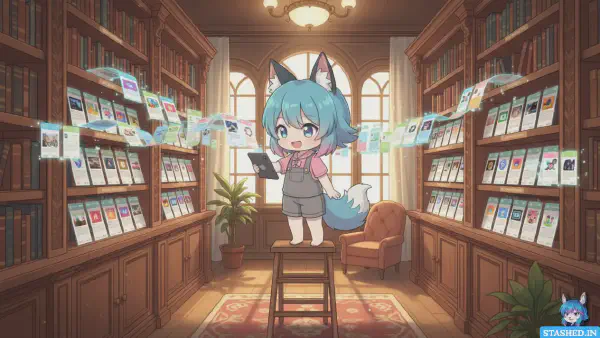
You read something brilliant → one click → it appears as a beautiful card with auto-fetched cover image, title and description → you drop it into a visual board called “Pricing Psychology” → six months later you open that board and instantly recognize every card → you drag one into a new board called “For the new SaaS launch” → share that board with your co-founder with one link.
No copying. No highlighting. No rewriting. No export headaches.
Just the internet, lightly curated.
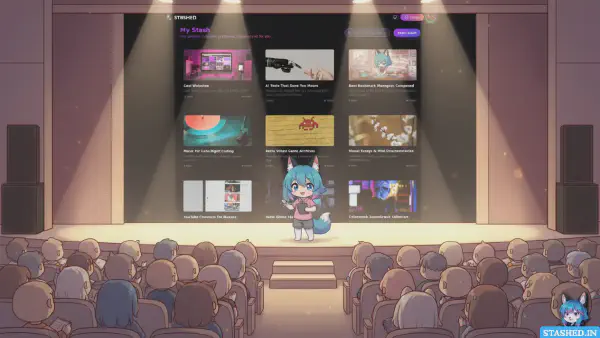
That’s not science fiction. That’s stashed.in today, and it’s the direction everything is heading.
Evidence That Links Are Already Winning#
Look at the fastest-growing “knowledge” platforms right now:
- Are.na – visual blocks, mostly links and images
- Orbit (by Reflect) – link-first timeline
- Threads / Twitter circles – people sharing raw links again
- Glasp – social highlighting directly on the page
- MyStash (Russia) and stashed.in – Pinterest-style link boards
None of them ask you to rewrite the web. They all assume the source of truth stays where it belongs: on the original site.
Even Notion quietly added “web bookmarks” with rich previews in 2024 because users kept complaining that pasted links looked terrible.
The market is screaming for link-native tools. We just haven’t fully admitted it yet.
The Four Problems Only Link-Based Systems Solve#
Up-to-date knowledge
Your stashed link to Paul Graham’s latest essay updates when he edits it. Your copied note from 2022 stays wrong forever.Serendipity at scale
Visual grids let you scan 200 links in ten seconds. Text files don’t.Social osmosis
One public stash teaches ten friends more than ten private Obsidian vaults ever will.Zero friction capture
Bookmarklet or share sheet → stash → done. Takes 2.4 seconds on average on stashed.in. Beats opening your note app, creating a new file, and writing a title.
Why Visual + Social Is the Killer Combo#
I tried pure private link saving for years (Pinboard, Raindrop, browser bookmarks). They all eventually rotted.
The moment I made my stashes public (or at least shareable), something changed. I started caring. I deleted junk. I wrote short descriptions. I chose header images that triggered memory.
When there’s even the possibility of another human seeing your collection, you treat it with respect.
Add visual layout and your brain does the rest. Humans can recognize a thumbnail in 13 milliseconds. We can scan a 5×10 grid of covers and spot the one we need without reading a word.
That’s why stashed.in boards feel like memory palaces made of the actual internet.
The Objection Section (Because I Know You Have Them)#
“Links die.”
Yes. About 8 % per year. But your copied note dies the moment the author updates their thinking and you don’t notice. I’ll take the 92 % that survive.
“I need to highlight and annotate.”
You can. Use Glasp, Hypothesis, or stashed.in’s upcoming notes field. The annotation lives beside the link, not instead of it.
“I do original writing and interconnected thinking.”
Great. Do that in your writing app. Keep the links that inspired you in a stash called “Sources for Essay X” and link the two systems with one URL.
No single app has to do everything anymore.
Where This Goes in the Next Five Years#
My predictions, written down so you can roast me later:
- By 2027, at least two of the big three note apps (Notion, Obsidian, Roam) will ship a first-class visual link board mode that looks suspiciously like stashed.in
- By 2028, most new knowledge workers will have a public link garden the way they currently have a public Twitter or LinkedIn
- By 2030, the phrase “second brain” will feel as dated as “cloud storage” does now—because the web itself, lightly curated, will be the second brain
Start Building Your Link-Based Brain Today (It’s Easier Than You Think)#
You don’t need to abandon your current system. Just add one new habit:
Every time you would have copied an article into your notes, stash the link instead.
Make one board called “Raw Material.”
Make another called “Evergreen.”
Make a third called “Mind-Blowing Shit 2025.”
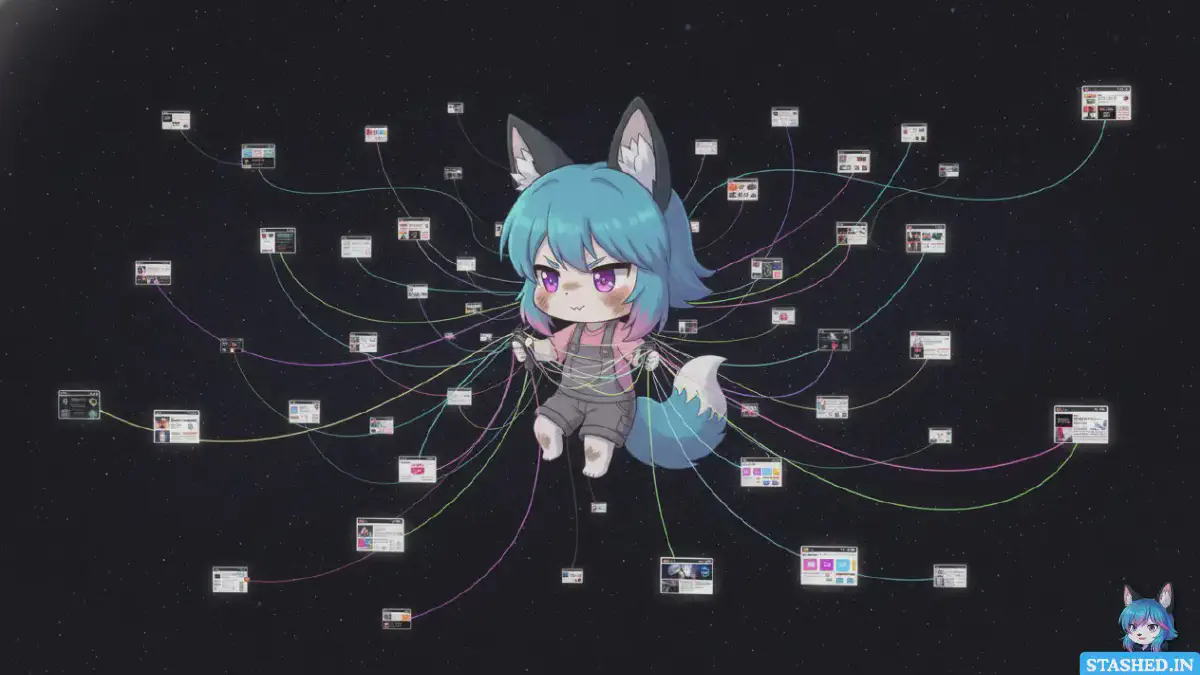
Six months from now you’ll have a living, visual constellation of everything that ever expanded your mind. And you’ll barely have lifted a finger.
I’ve been running my entire knowledge diet this way for two years. Zero permanent notes. Zero highlighter burnout. Just links, arranged like art.
The future isn’t more text files.
The future is the internet, remembered beautifully.
Come build it with us.
→ stashed.in
(Stasha has already saved you a spot in the constellation.)