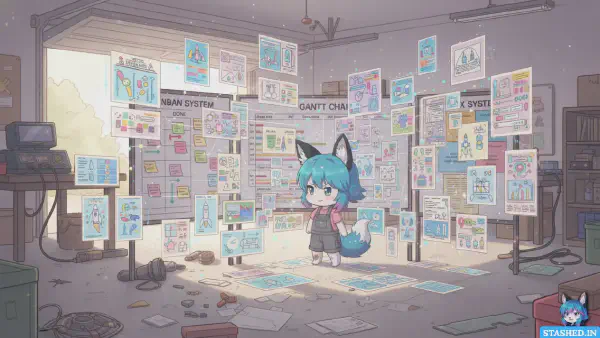

My favorite designers all have something in common. They can pull references seemingly out of thin air. Ask them about their design choices and they’ll say things like “I was thinking about this architectural detail I saw in Barcelona” or “Remember that Japanese poster from the 60s with the asymmetric layout?” They have vast internal libraries they’ve been building for years.
I used to think this was just about having a good memory or being widely cultured. It’s not. It’s about having a collector’s mindset.
These designers aren’t just experiencing the world. They’re actively collecting from it. Every interesting thing they encounter gets mentally filed away, connected to other things they’ve seen, and becomes available for future creative work.
The difference between creators who consistently produce interesting work and those who struggle isn’t talent or discipline. It’s usually the size and quality of their reference library. You can’t make connections between ideas you’ve never encountered. You can’t draw inspiration from things you haven’t collected.
But there’s a catch. The collector’s mindset can easily become digital hoarding. Saving everything “just in case” without any real intention or organization. Building piles instead of libraries.
The difference between useful collection and useless accumulation is intentionality, curation, and a system that actually serves your creative work. Here’s how to build that.
What a Collector’s Mindset Actually Means#
A collector’s mindset isn’t about acquisition for its own sake. It’s about recognizing that creative work happens at the intersection of ideas, and you can only connect ideas you’ve encountered and remembered.
Think about how museums work. They acquire objects, but not randomly. Each acquisition serves the museum’s mission, fills gaps in the collection, or opens new possibilities for exhibitions and research. The curation is what makes a collection valuable rather than just a warehouse of stuff.
Your creative library needs the same intentionality. You’re not collecting everything you see. You’re building a curated repository of references, techniques, aesthetics, and ideas that support the kind of work you want to make.
Research on creativity and expertise consistently shows that creative output correlates with the breadth and depth of knowledge in related domains. The more you know, the more you have to work with. But crucially, it’s organized knowledge that matters, not random information.
The collector’s mindset is active, not passive. You’re not just absorbing whatever crosses your path. You’re actively seeking, selecting, and organizing material that will feed your creative work.
The Difference Between Collecting and Hoarding#
Let’s address the obvious concern: how is this different from being a digital hoarder who saves everything and uses nothing?
The distinction comes down to three things: intention, curation, and use.
Intention means you know why you’re collecting something. Hoarders save things because they might be useful someday. Collectors save things because they serve a specific purpose in their creative work or thinking.
Curation means you’re selective. Hoarders accumulate. Collectors choose. Not everything that’s interesting deserves to be saved. Good collectors develop taste about what’s worth adding to their library.
Use means your collection actually feeds your work. Hoarders have archives they never look at. Collectors have living libraries they reference regularly and use to generate new ideas.
The collector’s mindset accepts that not everything can or should be kept. You’re building a library that serves your work, not a museum of everything you’ve ever seen.
What Belongs in a Creative Library#
So what should you actually collect? The answer depends on your work, but some categories are universally useful for creative professionals.
Visual references: Design work you admire, photography that captures a mood, color palettes that resonate, typography that solves specific problems, layouts that work. This is the most obvious category and what most designers already collect to some degree.
Technical resources: Tutorials for techniques you want to learn, documentation for tools you use, code snippets that solve common problems, workflows that could improve your process. This is the practical layer that makes you more capable.
Conceptual inspiration: Articles about creativity, frameworks for thinking, mental models that clarify problems, research that informs your work. This is what elevates your work from just being pretty to having depth.
Adjacent fields: Things outside your direct domain that inform your perspective. If you’re a designer, maybe architecture, film, music, or data visualization. Cross-pollination between fields is where interesting ideas come from.
Your own work: Finished projects, experiments, sketches, failed attempts. Your creative history is part of your reference library. You’ll find yourself returning to old work more than you expect.
The key is balance. Too narrow and your work becomes repetitive. Too broad and your collection becomes unfocused. Collect widely within domains that actually relate to your creative practice.
How to Develop Your Collector’s Eye#
Having a collector’s mindset starts with noticing. Most people go through the world in a semi-conscious state, experiencing things but not really seeing them. Collectors pay attention differently.
Practice active observation. When you see something that catches your attention, pause. What specifically drew you to it? The color? The composition? The concept? Being specific about what you notice helps you understand your own aesthetic sense.
Ask “why does this work?” Don’t just appreciate things. Analyze them. Why is this layout effective? Why does this color combination feel right? What makes this animation satisfying? Understanding principles helps you apply them later.
Look for patterns across time. What keeps catching your attention? Which aesthetics do you return to? What problems do you keep trying to solve? Noticing your own patterns helps you collect more intentionally.
Study adjacent disciplines. Where do ideas in your field come from? Graphic design borrows from art history. Web design borrows from print. Understanding the lineage of ideas helps you collect more thoughtfully.
Create context for what you collect. Don’t just save things. Write a sentence about why they matter. What caught your attention? What could you learn from this? Context makes collections useful instead of just saved.
This active engagement is what separates collecting from passive consumption. You’re not just scrolling and saving. You’re thinking about what you encounter and why it matters.
Building a Collection System That Actually Works#
Having a collector’s mindset is one thing. Having a system that supports it is another. Most creative professionals have reference materials scattered across dozens of places and can never find anything when they need it.
Your collection system needs to support both breadth and depth. Breadth means you can collect across different categories and projects. Depth means you can build substantial collections in specific areas without everything becoming a jumbled mess.
Here’s what doesn’t work: browser bookmarks (too limited and text-based), saving everything to desktop folders (disorganized and hard to browse), Pinterest (too scattered, mixed with content you don’t care about), or keeping everything in your head (you’ll forget most of it).
What does work is visual organization with flexible categorization. This is why I built stashed.in around visual collections with thematic organization rather than rigid hierarchies.
For example, I have separate stashes for:
- “Typography Excellence” with examples of type treatments that solve specific problems
- “Color Palettes Worth Stealing” organized by mood and context
- “Web Animation Inspiration” showing what’s possible with modern tools
- “Design Systems Reference” for when I need to think through structure
Each stash has a header that visually communicates what it’s about. When I need inspiration for color, I’m looking for that stash’s visual signature, not trying to remember what I titled it.
The collections can overlap. One piece might be good for both color and layout. That’s fine. Digital collections don’t have the physical constraints of filing cabinets where everything must live in exactly one place.
The Weekly Collection Ritual#
A collector’s mindset requires regular practice. I spend time every week tending my collections, and it’s become one of the most valuable parts of my creative process.
Sundays, 30 minutes: This is when I process everything I’ve encountered during the week. Things I saved quickly, screenshots I took, links still open in tabs, photos of interesting things I saw in the world.
I go through each item and ask:
- Does this belong in my collection or was it just momentarily interesting?
- If it belongs, which collection does it support?
- What specifically makes this worth keeping?
- What can I learn from this?
About half of what I saved during the week doesn’t make the cut. That’s fine. The weekly review is partly about filtering.
The items that do make it get added to appropriate stashes with brief context notes. This regular processing prevents the overwhelm of having thousands of unorganized references.
Monthly deep review: Once a month, I look at my collections as wholes. Are there patterns I’m noticing? Collections that need to be split or merged? Items that no longer fit? Gaps I should actively fill?
This deeper engagement is where the real value emerges. You start seeing connections between seemingly unrelated things. You notice what you’re drawn to and what that means for your work.
How Collections Feed Creative Work#
The point of building collections isn’t just to have them. It’s to use them. Here’s how I actively work with my reference library.
Project kickoff: When I start a new project, I browse relevant collections before doing anything else. This primes my thinking and reminds me of possibilities. I’m not copying anything, but I’m saturating myself with relevant references.
When I’m stuck: Mid-project blocks often happen because I’m thinking too narrowly. Looking at adjacent collections (not directly related to what I’m working on) often provides unexpected solutions through cross-pollination.
Before making decisions: Choosing colors, layouts, typography. Instead of just trusting gut instinct, I look at my collections to see what’s worked well in similar contexts. This grounds decisions in actual examples rather than just theory.
For learning: When I want to improve at something specific (like animation or illustration), I create a focused collection of excellent examples and study them systematically. The collection becomes a curriculum.
For sharing context: When collaborating with others, sharing a curated collection communicates direction better than trying to describe what I’m going for. “Here’s a stash of references that capture the vibe I’m after” is worth a thousand words.
The collections aren’t just archives. They’re active creative tools that get used constantly.
The Social Dimension of Collecting#
One underrated aspect of the collector’s mindset is sharing your discoveries. When you find something remarkable, showing it to others who might appreciate it is both generous and strategically valuable.
Generous because you’re helping others discover what you’ve found. Strategically valuable because explaining why something matters to someone else clarifies your own thinking about it.
I maintain both private and public stashes on stashed.in for this reason. Private collections are personal research and works-in-progress that aren’t ready to share. Public collections are curated discoveries I think others in the design community might find valuable.
The act of making a collection public also raises the quality bar. You think harder about what to include when you know others will see it. This makes your personal collections better too, because you’ve developed higher standards through the practice of public curation.
Some collections are somewhere in between. Client work gets password-protected stashes so teams can share references without making everything public. Study groups use shared collections to pool research. This middle ground between private and public is where a lot of collaborative work happens.
Avoiding Collection Paralysis#
One danger of the collector’s mindset is spending all your time collecting and never actually creating. This is real and worth watching for.
The collection should serve the work, not replace it. If you find yourself spending hours curating references instead of making things, you’ve crossed into procrastination territory.
Some warning signs:
- You have dozens of collections but rarely reference them
- You’re collecting things far outside your actual work domains
- You feel more satisfaction from organizing than creating
- Your collections keep growing but your output doesn’t
The fix is simple but requires honesty: limit collection time and prioritize creation time. I allow myself that Sunday collection ritual and occasional browsing when stuck. Otherwise, collection happens incidentally as I encounter things while working.
Collections exist to fuel work, not substitute for it. If that balance gets inverted, you’re hoarding rather than collecting.
What Makes a Collection Valuable Over Time#
The real test of a collection is whether it becomes more valuable with age. Bad collections become outdated. Good collections become richer.
What makes the difference?
Timeless principles over trendy techniques. Collect work that demonstrates fundamental design principles, not just what’s popular right now. The principles remain useful. The trends date quickly.
Depth in specific areas over breadth everywhere. Better to have a deep collection in domains you actually work in than shallow collections across everything that might someday be relevant.
Personal curation over algorithmic recommendation. Algorithms feed you what’s popular. Your curation reflects actual judgment about what’s good. The latter ages better.
Context preservation. Collections with notes about why things matter stay relevant. Collections that are just saved links become mysterious over time.
Regular pruning. Removing what no longer serves you keeps collections fresh. Not everything you saved three years ago still belongs.
I revisit old collections regularly and I’m always surprised by what I find. Work I’ve completely forgotten about. Techniques I could apply to current projects. Inspiration that hits differently now than when I first saved it.
A well-maintained collection is a time capsule of your creative development that becomes increasingly valuable as it grows.
Teaching Yourself Through Collection#
One unexpected benefit of the collector’s mindset: it becomes a self-directed education system.
When you decide to get better at something specific (let’s say animation), creating a focused collection around it becomes a learning tool. You’re not just consuming tutorials. You’re actively gathering excellent examples, studying them, noting what makes them work, and building a reference library you can return to.
This is how most creative professionals actually learn, not through formal education. They collect examples of excellence, study them, try to replicate them, and eventually develop their own approach informed by everything they’ve seen.
Your collections become your curriculum. The act of curating is itself educational because it forces you to develop taste and judgment about what’s good and why.
Building Your Collector’s Practice#
You don’t need to overhaul your entire workflow to start developing a collector’s mindset. Start small and build the practice over time.
This week: Start one focused collection around something you’re actively working on or want to get better at. Add just five carefully chosen examples. Write a sentence about why each one matters.
This month: Establish a weekly review ritual. Even 15 minutes. Process what you’ve encountered and decide what’s worth keeping.
This quarter: Reflect on your collections as a whole. What patterns do you see? What’s missing? How have your collections influenced your work?
The collector’s mindset is a practice, not a destination. You’re always refining what you collect, how you organize it, and how you use it. That’s the point. Your collections grow with you and your work.
Why This Matters for Creative Work#
Great creative work rarely comes from pure originality. It comes from seeing connections between existing ideas and combining them in new ways. You can only connect ideas you’ve encountered and internalized.
The collector’s mindset gives you more material to work with. More references to draw from. More techniques to apply. More aesthetic sensibilities to combine. More ways of approaching problems.
This doesn’t make you derivative. It makes you informed. You’re not copying what you collect. You’re building a rich vocabulary of possibilities that inform your unique creative voice.
Every designer you admire has been building their reference library for years, whether consciously or unconsciously. Making it conscious and systematic just accelerates the process.
Start Where You Are#
You probably already have the beginnings of collections scattered around. Screenshots in your phone. Bookmarks in folders. Pins on Pinterest. Links in notes apps.
Don’t start from scratch. Start by consolidating what you already have. Find one theme running through your scattered references. Create one proper collection around it. Add context to each item about why you saved it.
Then build from there. One collection at a time. One weekly review at a time. One reference at a time.
The collector’s mindset isn’t about perfection. It’s about being intentional about gathering the raw material that feeds your creative work.
Start collecting with purpose. Your future creative self will thank you for building a library worth exploring.