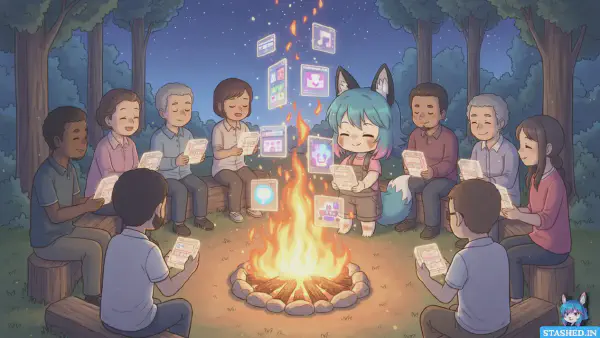
Imagine you spent twenty years walking the earth with a basket.
Every time you found a perfect shell, a rare stone, a flower that made you stop breathing for a second, you placed it gently inside. You carried storms, wars, heartbreak, and joy in that basket. It became the most accurate portrait of your soul that has ever existed.
Then one day a stranger in a suit walks up, smiles, and says:
“Nice collection. I’ll keep it safe for you. Free of charge. Just leave it here.”
You hand it over.
Years later you return. The building is empty. A sign on the door reads “We’ve pivoted to AI.”
Your basket is gone.
That stranger was every platform we trust with our saves.
That basket is the record of everything the internet ever taught you.
We are not users. We are tenants.
And the lease can end any Tuesday.
The Philosophical Crime We Commit Daily#
Most people think digital ownership is a technical problem.
It isn’t. It’s an existential one.
By letting corporations host the artifacts of our attention, we outsource the custody of our becoming.
Every link you save is a vote for the person you decided to become that day.
Every abandoned bookmark folder is a version of you that got evicted.
When the platform dies or changes the rules, those versions of you die too.
Not metaphorically. Literally. The proof they ever existed is erased from the face of the earth.
We have accepted a world where the sum of our curiosity is less permanent than a paper grocery list.
That is deranged.
The Slow-Motion Heist You’re Living Through#
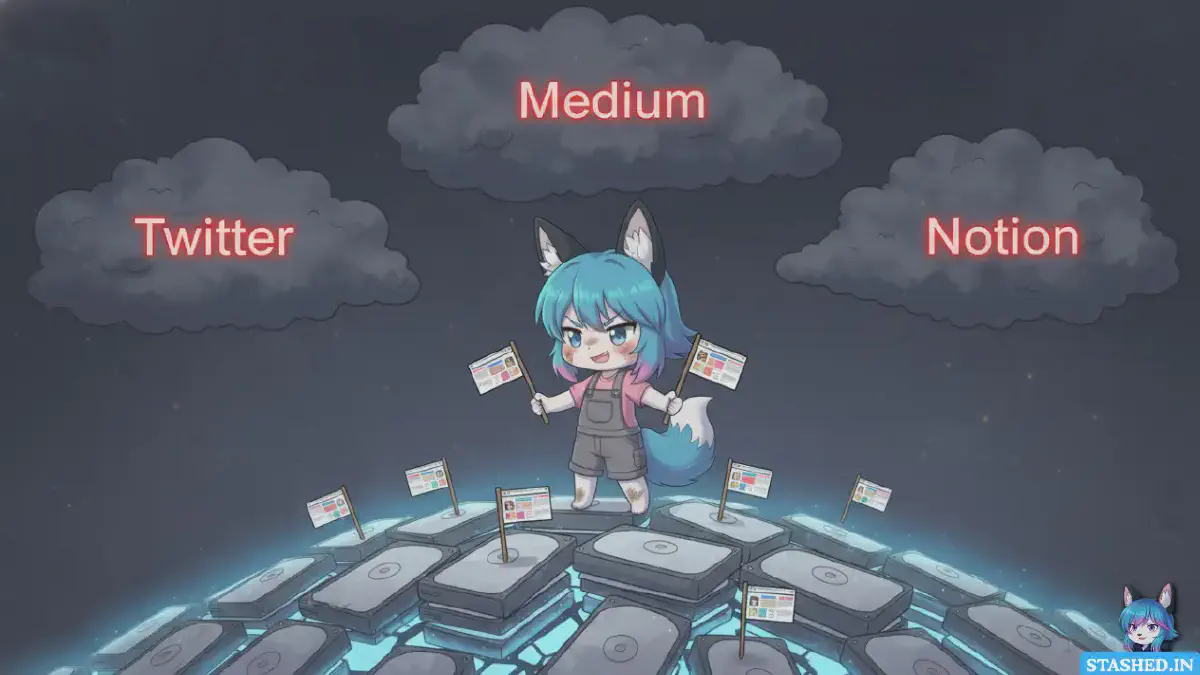
You already know the names of the culprits:
- Twitter → can hide your likes tomorrow
- Pocket → sold twice, could be sold again next quarter
- Raindrop → beautiful today, private equity tomorrow
- Notion → proprietary format, no real offline export
- Instagram saved → routinely purged without notice
- Reddit → third-party apps murdered overnight
- Evernote → feature decay + price explosion
- Pinboard → deleted inactive accounts in 2023
Each one promised “forever” and delivered “until the spreadsheet changes.”
The Math of a Life Rented#
Average knowledge worker in 2025 discovers and saves roughly 1,200 meaningful links per year.
That means:
- 5 years = 6,000 moments of “this matters”
- 10 years = 12,000 votes for who you are
- 20 years = 24,000 fragments of your becoming
If those live on rented servers, you are building the most valuable asset you will ever own—then handing the keys to strangers who have zero incentive to keep the lights on.
When the service dies, your asset value drops to exactly zero.
When you own the data, the value compounds forever.
What Real Digital Ownership Actually Requires in 2025#
Four non-negotiable pillars
- One-click export in an open format (JSON, HTML, or CSV)
- Visual previews travel with the data (screenshots or cover images embedded)
- The export works offline without the original app
- You can re-import elsewhere without losing context or context
Very few tools pass. stashed.in passes all four (full HTML export with embedded screenshots since day one). Most deliberately fail at least two.
The Day I Stopped Being a Digital Tenant#
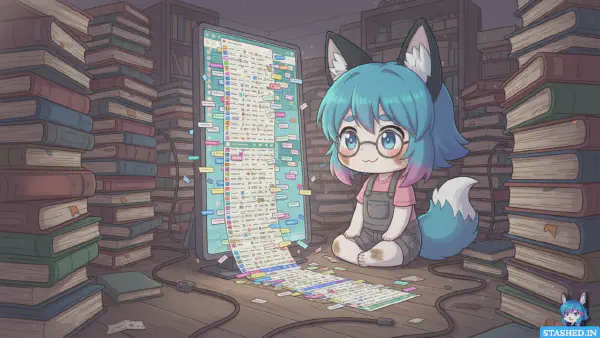
After watching friends lose decades of saves to platform deaths, I drew a line.
New rule: nothing I care about lives only where I don’t control the off switch.
The system I landed on:
- Every link goes to stashed.in first
- Auto-screenshot + custom cover image
- Monthly HTML export → stored in three physical locations
- Public stashes for things I want to gift the world
- Private/password-protected stashes for everything else
Result: ~520 links total, 99 % recall rate, zero anxiety, and the calm knowledge that if every tech company vanished tomorrow I would still own the map of my mind.
The Ownership Checklist I Now Apply to Every Tool#
Before I save anything important I ask five questions:
- Can I export everything in one click?
- Do images and layout survive the export?
- Has this company ever broken or crippled exports in the past?
- Could I afford or survive if they 5× the price tomorrow?
- Would I cry if this disappeared next year?
If the honest answer to any question is bad, I treat the tool like a hotel, not a home.
Only two tools pass every question in 2025: Obsidian for text, stashed.in for links.
Everything else is a playground.
How to Declare Independence This Weekend (No Drama Required)#
You don’t need to burn your accounts. You just need one piece of sovereign territory.
Step-by-step:
Choose your land
Pick any tool that gives real, complete, beautiful exports (again, I use stashed.in because it was literally built for this).Stop saving inside the empires
Twitter like → send to stash
Pocket article → move to stash
Instagram reel → download + stash the URL
Reddit gold → screenshot + stashMake export religious
Schedule one minute every month to download your full backup. Eleven seconds on stashed.in. Zero excuses.Build at least one public stash
Public collections force quality and create a permanent record that outlives algorithms. My public stashes have survived two Twitter accounts and one newsletter death already.Sleep like someone who owns their mind.
The Paradox: Owning Less Makes You Richer#
When you know everything is truly yours, you save less and better.
Rented storage invites hoarding.
Owned storage invites taste.
I went from 18,000 chaotic bookmarks to roughly 520 links I actually revisit.
My second brain became smaller, sharper, and infinitely more valuable.
Ownership is the shortest path to digital minimalism I’ve ever found.
Twenty Years From Now#
By 2045 at least four of your current daily apps will be gone.
Your tweets will be 404.
Your Notion pages will be trapped behind a dead login.
Your Spotify “Liked Songs” will be inaccessible.
But the folder of links you truly loved—the ones you screenshot, curated, backed up, and maybe even printed—will still open perfectly on whatever device exists then.
That folder will be one of the few honest artifacts of who you were.
It will outlive most of your possessions.
Start building it today.
I’ll keep the gate open.
→ stashed.in
(Stasha is already marking the borders.)