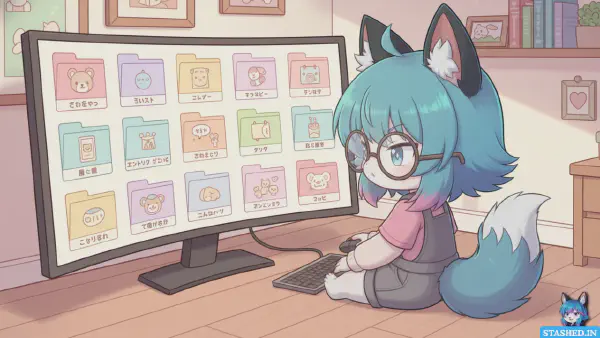
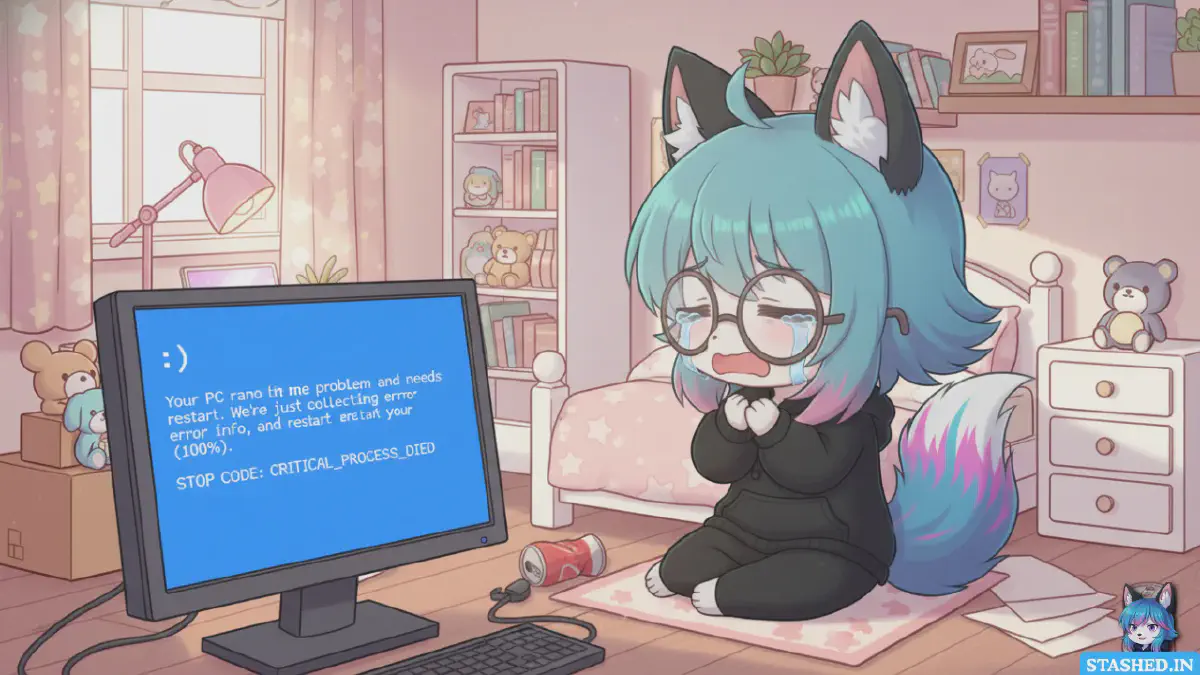
I still remember the moment it happened.
A single sync error, a quick browser update, and then - gone.
Two thousand bookmarks. Articles, tutorials, videos, essays, old blog posts that no longer exist. All of it, wiped out in less than a second.
At first, I sat there in disbelief. Then panic. Then silence. The kind of silence that feels heavier than it should for something as simple as a folder full of URLs.
But the truth is, it wasn’t just a folder of URLs.
It was a decade of digital breadcrumbs, my web memory, my quiet archive of curiosity. Losing it felt like losing a piece of myself.
And yet, as the days went on, I realized something unexpected. That loss was one of the most liberating digital experiences I’ve ever had.
The Quiet Addiction We Don’t Talk About#
Digital hoarding doesn’t look like piles of old clothes or stacks of newspapers. It looks clean. Organized. Invisible.
It lives in neatly named folders like “Read Later,” “Resources,” “Ideas,” “Inspiration.” It hides behind the innocent blue star icon on your browser bar.
We tell ourselves it’s productive. We’re not hoarding, we’re collecting knowledge.
Except most of that “knowledge” never sees the light of day again.
When I looked honestly at my lost bookmarks, I realized how many I hadn’t opened in years. I was saving links the way people save plastic bags, “just in case.”
And just like clutter in a room, digital clutter weighs on you in ways you don’t notice until it’s gone.
The Illusion of “Later”#
Every time I clicked “Save,” I told myself the same lie: I’ll come back to this later.
Later, when I have time. Later, when I’m in the right mood. Later, when I’m smarter, more focused, more ready.
But “later” never came.
Saving something became a ritual of avoidance. A way to feel like I was learning without actually engaging. I wasn’t reading or thinking; I was archiving my curiosity for a future version of me who didn’t exist.
That future self was a myth.
And my bookmark folders were her imaginary library.
The False Security of Ownership#
There’s a strange comfort in saving things. It gives us a sense of control in an uncontrollable world.
When you save a link, you feel like you’ve captured it. Like it’s yours now, safe from the chaos of the internet. But that’s an illusion. The web changes faster than we realize, pages vanish, sites go dark, links rot.
Half of my saved bookmarks didn’t even work anymore.
The internet isn’t a library; it’s a living organism. Trying to preserve it is like trying to trap the wind in a jar.
What the Loss Taught Me#
Once the initial frustration faded, I noticed something strange: I didn’t miss most of it.
The first few days felt disorienting, but then, clarity.
The urge to “save everything” started to feel heavy, unnecessary.
Without thousands of links whispering for my attention, I finally saw how much space they’d been taking up in my head.
I started reading things in the moment instead of hoarding them for later.
I started writing down key insights instead of saving entire pages.
And most importantly, I started letting go of the need to own every piece of information I came across.
I stopped being an archivist of the web and became a participant again.
The Minimalist Shift#
When I finally decided to rebuild my collection, I made one rule: I only save what I use.
No more “maybe someday” links.
No more folders inside folders.
No more bookmarks that require detective work to understand why I saved them in the first place.
That’s when I found stashed.in — a platform built around the exact mindset I was trying to adopt.
Instead of throwing everything into a black hole of folders, it treats saved links like living pieces of your digital life. Each stash feels like a curated moodboard, visual, organized, and intentional.
You don’t just save links there; you build collections that reflect your current interests, not your anxieties about the future.
For someone trying to recover from digital hoarding, it felt like discovering a new way to breathe.
The Psychology of Letting Go#
Losing my bookmarks forced me to face something uncomfortable: I was afraid of forgetting.
Every link I saved was a defense against that fear; the fear of losing an idea, a resource, a spark. But the truth is, memory doesn’t live in data. It lives in meaning.
If something truly matters, it stays with you, in your habits, in your thoughts, in the work you do. The rest? It was just noise disguised as knowledge.
Letting go of thousands of links didn’t make me forget. It made me remember what was actually worth keeping.
Rebuilding Intentionally#
Now, my digital world feels smaller, but in the best way.
Every link I save has a reason to exist. I revisit them often. I tag them with thoughts instead of categories. I delete them when they no longer spark anything in me.
And because I use a system like stashed.in, I can see my ideas evolve visually. My collections reflect what I care about right now, not what I used to chase years ago.
Minimalism isn’t about emptiness, it’s about focus.
And focus feels so much lighter than the constant background hum of “I should read this someday.”
A Quiet Kind of Freedom#
I used to think my bookmarks were a reflection of my curiosity. Now I see they were a reflection of my fear; fear of missing out, fear of forgetting, fear of falling behind in a world that moves too fast.
When I lost them, I lost that fear too.
What replaced it was something quieter and stronger: trust. Trust that I’ll find what I need again. Trust that my brain, not my browser, is where learning really happens. Trust that knowledge isn’t in the saving, it’s in the doing.
So no, I don’t mourn my lost bookmarks anymore.
They served their purpose, even in disappearing.
They taught me that digital minimalism isn’t about control, it’s about letting go of the illusion of it.
And sometimes, the best way to declutter your mind is to let your browser crash spectacularly and start over.
Because the truth is, we don’t need 2000 bookmarks.
We just need to remember why we save things in the first place.