I still remember the exact moment I realized Google Reader was dying.
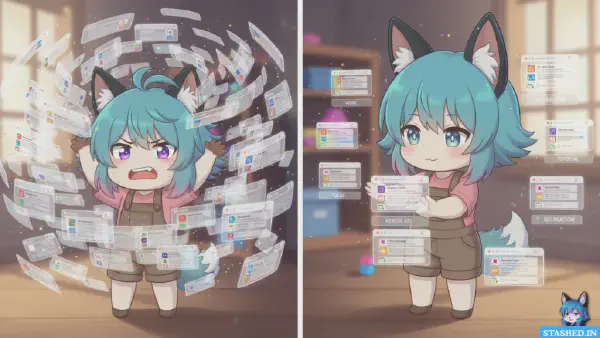
It was March 2013. I opened my morning routine: coffee, laptop, Google Reader with its familiar three-pane interface. 1,247 unread items. I’d meticulously subscribed to 200+ blogs, organized them into folders, and felt like I had my finger on the pulse of the internet.
Then the announcement: Google Reader would shut down in three months.
I panicked. Not just about losing a tool, but about losing my entire system for understanding what was happening online. RSS feeds were how I stayed informed, discovered new ideas, and felt connected to communities. Without Reader, how would I even know what to read?
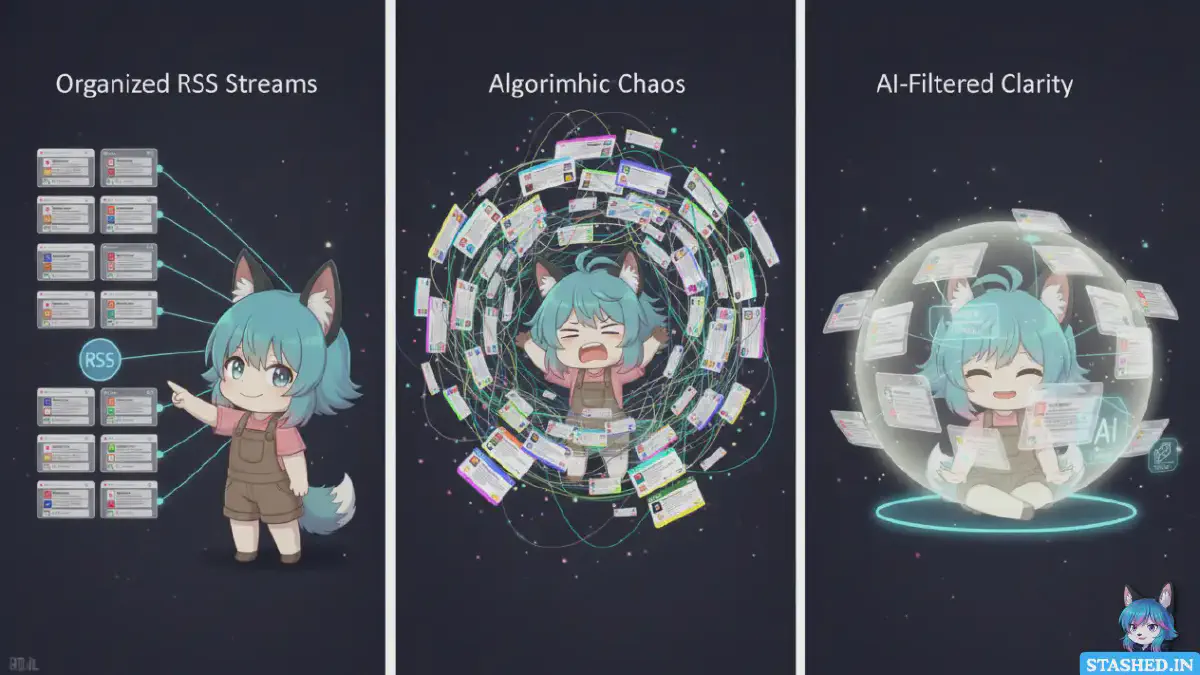
Twelve years later, that panic seems almost quaint. We’ve gone through multiple revolutions in how we consume web content. RSS gave way to social media feeds. Those got algorithmic. Now AI is reshaping everything again.
As someone building stashed.in right in the middle of this transition, I’ve had a front-row seat watching how people discover, consume, and organize content. Each shift hasn’t just changed our tools. It’s changed how we think, what we remember, and our relationship with information itself.
Let me walk you through this evolution and what it means for how we should be thinking about content consumption in 2025.
The Golden Age of RSS (2005-2013)#
For those too young to remember or those who’ve forgotten, RSS was magical in its simplicity.
How RSS Actually Worked#
You subscribed to websites by adding their RSS feed URL to your reader. Whenever they published something new, it appeared in your reader. Chronological. Unfiltered. Complete.
You controlled everything. Which sites. What topics. How they were organized. No algorithm decided what you saw. No engagement metrics shaped your feed. Just you, your subscriptions, and everything they published.
Google Reader became the dominant platform because it did one thing excellently: let you read everything you cared about in one place. The interface was clean. Keyboard shortcuts were powerful. Syncing across devices was seamless.
What Made RSS Great#
Complete control over your information diet. You chose exactly which sources to follow. If you subscribed to 50 blogs, you saw everything those 50 blogs published. Nothing more, nothing less.
Chronological, not algorithmic. Content appeared in the order it was published. The most recent stuff at the top. Simple. Predictable. Fair to small publishers and major sites alike.
No engagement manipulation. RSS feeds couldn’t track whether you read something, clicked it, or spent time on it. Publishers couldn’t optimize for engagement. They just published, and you decided what to read.
Ownership and portability. Your subscription list was yours. Export it, move to another reader, take it with you. No lock-in. No platform controlling your access to information.
Focus-friendly reading. RSS readers were designed for reading, not for maximizing time-on-site. You could mark things read, star important items, and move on. The interface supported finishing, not endless scrolling.
Why RSS Failed (Or Seemed To)#
Despite these advantages, RSS never achieved mainstream adoption. Even at its peak, it remained a power-user tool.
Too much control required effort. You had to find RSS feeds. Add them manually. Organize them. This friction was fine for early adopters but kept out casual users.
The firehose problem. Following 200 blogs meant dealing with hundreds of unread items daily. That “1,247 unread” number created anxiety. People felt behind, not informed.
No social discovery. RSS was solitary. You couldn’t easily see what others found interesting. No sharing, commenting, or discussion within the reader itself.
Publishers saw limited benefit. RSS readers stripped away ads and branding. Publishers got no analytics about RSS readers. This made RSS an economically unappealing distribution channel.
Mobile killed the three-pane interface. RSS readers were designed for desktop. Their information-dense layouts didn’t translate well to phones. And by 2013, mobile was clearly the future.
When Google shut down Reader, it wasn’t killing a thriving ecosystem. It was acknowledging that most people had already moved on.
The Social Media Feed Era (2010-2020)#
Even before Reader died, the shift was happening. Twitter, Facebook, and later Instagram were changing how people discovered content.
The Promise of Social Feeds#
Instead of you finding content, content found you through your social network. Friends shared articles. Influencers curated links. Communities discussed ideas. Discovery became social and serendipitous.
This solved several RSS problems:
Lower friction. Follow people, not feeds. No need to manually hunt for RSS URLs. Just click “follow” and start seeing their shares.
Social discovery. See what your network finds interesting. Discover content through people you trust, not just sources you know about.
Built-in discussion. Comments, replies, and reactions happened in the same place as content discovery. Reading became social.
Mobile-native design. Social feeds were designed for phones from the start. Infinite scroll. Large images. Easy interaction. This matched how people actually used their devices.
When Algorithms Took Over#
Early social feeds were chronological, like RSS. But that didn’t last. By the mid-2010s, every major platform had switched to algorithmic curation.
The stated reason: “Show you the best content, not just the most recent.”
The real reason: Maximize engagement to sell more ads.
Studies on algorithmic feeds show they’re incredibly effective at keeping you scrolling. But they’re less effective at showing you what you actually want to see.
Algorithms optimize for engagement, not for your goals. They learn what keeps you on the platform, then show more of it. This creates filter bubbles, amplifies outrage, and turns feeds into slot machines of variable rewards.
What We Lost in the Transition#
The shift from RSS to social feeds wasn’t just a tool change. It was a fundamental shift in how we relate to information.
From pull to push. RSS was pull-based. You went to your reader when you wanted to read. Social feeds are push-based. They’re designed to pull you in constantly with notifications and updates.
From comprehensive to curated by algorithm. RSS showed you everything from your subscribed sources. Algorithmic feeds show you what the algorithm thinks will keep you engaged. You never see most of what people you follow actually share.
From focused to scattered. RSS readers were for reading. Social platforms are for everything: reading, socializing, arguing, performing. Context collapse makes focused consumption nearly impossible.
From ownership to tenancy. Your RSS subscriptions were yours. Your social media follows exist at the platform’s pleasure. They can change the algorithm, promote certain content, or sunset the platform entirely.
From finishing to infinite scrolling. RSS readers had an end. You could reach inbox zero. Social feeds are designed to be infinite. There’s always more. You never finish. This creates constant partial attention instead of focused engagement.
The Creator Economy Shift (2018-Present)#
Around 2018, another shift began. Creators started moving away from platforms and building direct relationships with audiences.
The Newsletter Renaissance#
Substack, Ghost, and similar platforms enabled creators to email audiences directly. This brought back some RSS-era principles:
- Direct subscription (you choose what to follow)
- Chronological delivery (everything they send, you receive)
- Owned relationships (the creator has your email, not a platform)
But with modern improvements:
- Mobile-friendly by default (it’s just email)
- Built-in monetization (subscriptions, not just ads)
- Direct creator-audience relationship (no algorithm mediating)
Newsletters solved some social media problems but created new ones. Now instead of one feed, you have dozens of newsletters. Your inbox becomes the new firehose.
Podcast Proliferation#
Podcasts exploded similarly. RSS-based (ironically), creator-owned, audience-direct. But with the same discovery problem: how do you find good podcasts among millions?
Spotify and Apple tried to add algorithmic recommendations. This helped discovery but reintroduced platform control that RSS was supposed to avoid.
The Curation Opportunity#
This fragmentation created an opportunity: if content is scattered across newsletters, podcasts, blogs, social platforms, and more, curation becomes valuable.
Not algorithmic curation by platforms optimizing for engagement. Human curation by people with taste, organizing content by themes that matter.
This is partly why I built stashed.in the way I did. As content scattered, people needed ways to collect, organize, and share what they found valuable. Not in private notes, but in shareable collections that help others navigate the chaos.
AI Enters the Feed (2023-Present)#
Then AI changed everything again.
How AI Is Reshaping Content Discovery#
Large language models made several new things possible:
Semantic understanding. AI can actually understand what content is about, not just match keywords. This enables better recommendations based on meaning, not just signals like clicks or likes.
Personalized summarization. Instead of reading full articles, you can get AI summaries tailored to what you care about. This sounds efficient but has implications we’re still figuring out.
Cross-platform aggregation. AI can pull from newsletters, articles, videos, podcasts, and tweets, understanding all formats. This solves the fragmentation problem differently than human curation.
Conversational discovery. Instead of scrolling feeds, you can ask “What’s new in [topic]?” and get a curated response. Search becomes conversation.
Automated curation. AI can create personalized “feeds” from your interests without you manually subscribing to anything. It finds and surfaces relevant content automatically.
The Promise of AI Feeds#
AI advocates argue this is better than algorithmic feeds because:
Not optimizing for engagement. AI can optimize for your stated goals (stay informed about X, learn Y, find inspiration for Z) rather than maximizing time-on-platform.
Truly personalized. Not just “people like you clicked this” but understanding your actual interests, knowledge level, and goals.
Time-saving. Summaries and curation reduce time spent finding and reading content while still keeping you informed.
Breaking filter bubbles. AI can deliberately show you diverse perspectives if you ask it to, rather than just reinforcing existing views.
The Concerns About AI-Mediated Content#
But AI feeds also create new problems:
Loss of serendipity. When AI curates based on your known interests, you stop discovering things outside those boundaries. RSS and social feeds had algorithmic weaknesses, but at least you encountered unexpected things.
Intermediated relationships. You’re not reading creators directly. You’re reading AI summaries and syntheses. The creator-audience relationship weakens.
Source obscurity. When AI summarizes across many sources, attribution gets messy. You learn the information but lose connection to who created it and their broader work.
Truth and accuracy concerns. AI can hallucinate or misrepresent source material. When it summarizes content, errors can propagate without you seeing the original to verify.
The training data problem. If AI is trained on web content but everyone reads AI summaries instead of original content, where does future training data come from? This could create a collapse in original content creation.
What Actually Works in 2025#
After watching this evolution and talking to hundreds of stashed.in users, here’s what I’ve learned about effective content consumption in 2025:
Hybrid Approaches Work Best#
Don’t choose between RSS, social, newsletters, and AI. Use each for what it does well:
RSS for must-follow sources. A handful of blogs or sites you want everything from. Keep your RSS subscription list small (under 20 sources). These are your core trusted sources.
Social media for discovery only. Not for deep reading. Use it to discover interesting ideas and people. But when you find something valuable, save it properly rather than hoping the algorithm shows it again.
Newsletters for depth. Subscribe to a few excellent newsletters that provide real analysis and synthesis. Unsubscribe ruthlessly from anything you’re not actually reading.
AI for exploration. Use AI to explore new topics, get overviews, and find starting points. But verify by reading original sources when it matters.
Link curation for memory. Save valuable content in organized collections. Whether you found it via RSS, social, newsletter, or AI, capture it with context in a system you can browse later.
Curate What You Consume#
The firehose is only overwhelming if you try to drink from it. Be radically selective:
Follow fewer sources, not more. Quality over quantity. Ten excellent sources beat 100 mediocre ones.
Unsubscribe frequently. If you skip a newsletter three times, unsubscribe. If someone’s tweets no longer interest you, unfollow. Your attention is precious.
Use AI for triage. Let AI summarize low-priority content. Read full articles only for high-priority topics.
Save strategically. Don’t save everything. Save what you’ll actually reference or want to share. When you do save, add context about why it mattered.
Build Reading Rituals, Not Habits#
Constant content consumption is exhausting. Instead of being always-on, create specific times for focused reading:
Morning briefing. 20 minutes with coffee, catching up on key sources.
Deep reading blocks. Weekly time for long-form content that requires focus.
Evening wind-down. Light reading before bed, not doom-scrolling social feeds.
Weekend exploration. Time to wander through saved collections, explore new topics, follow curiosity without pressure.
These rituals create boundaries. You’re not always consuming, always catching up, always behind. You’re engaging deliberately at specific times, then moving on.
Organize for Rediscovery, Not Just Discovery#
The real value isn’t just finding content. It’s being able to find it again when you need it.
This is where tools like stashed.in become essential. When you discover something valuable (whether via RSS, social, AI, or anywhere else), save it to a thematic collection with brief context.
That article about pricing strategy? Saved to your “Business Strategy” stash with a note: “Best explanation of value-based pricing I’ve found.”
That tutorial about CSS Grid? In your “Frontend Development” collection with context: “Solved my responsive layout problems.”
Over time, these collections become personal knowledge bases. You’re not just consuming content. You’re building curated libraries organized by how you actually think and work.
The visual, Pinterest-like format helps too. Collections with header images that reflect their vibe become recognizable at a glance. Browsing your stashes feels pleasant rather than overwhelming.
What I Predict for the Next Five Years#
Based on current trajectories, here’s where I think we’re heading:
AI Will Become Infrastructure#
Just like databases and APIs became invisible infrastructure, AI will fade into the background of every content platform. You won’t “use AI tools for content.” AI will just be how content platforms work.
This means:
- Every reader will have AI summarization built in
- Discovery will be AI-mediated by default
- Search and browsing will blur together
Human Curation Will Become More Valuable#
As AI handles basic aggregation and summarization, human curation with taste and judgment will differentiate.
People will pay for:
- Curated collections by experts in specific domains
- Newsletters that provide synthesis AI can’t replicate
- Communities where humans filter signal from noise
This is already happening but will accelerate.
The Pendulum Will Swing Toward Owned Platforms#
We’ve been through this cycle before. Centralized platforms (social media) → fragmentation (newsletters, podcasts) → centralized platforms (new social apps) → fragmentation again.
I predict we’re heading into another fragmentation phase. People will want more control over their content consumption, not less. Tools that give you ownership and portability will win.
This is part of why stashed.in prioritizes export features and data ownership. The future isn’t platform lock-in. It’s tools that serve you and let you leave anytime.
Visual and Audio Will Dominate Text#
Text isn’t dying, but it’s no longer default. Video, audio, and visual content will continue growing as a percentage of web consumption.
Tools need to handle all formats, not just articles. Save YouTube videos, podcast episodes, Instagram posts, Twitter threads. The format shouldn’t matter.
Context Will Be Currency#
With infinite content available, context becomes the valuable thing. Not just the URL, but why it matters. Not just the resource, but how it connects to other ideas.
This is why I’m obsessed with context in stashed.in. The one-sentence note you add when saving a link is often more valuable than the link itself. It’s your thinking, not just a pointer.
How to Build Your Content System for 2025#
Based on everything above, here’s a practical framework:
Step 1: Audit your current consumption (1 hour)
Track where you actually spend time consuming content for one week. Not where you think you should, but where you actually do.
Browser history doesn’t lie. How much time on Twitter? YouTube? Newsletters? RSS? Be honest.
Step 2: Identify your goals (30 minutes)
Why are you consuming content? What are you trying to achieve?
- Stay informed about your industry?
- Learn new skills?
- Find inspiration?
- Keep up with friends?
Different goals require different strategies.
Step 3: Choose tools for each mode (1 hour)
Based on your goals:
- For staying informed: RSS reader with 10-15 key sources
- For discovery: One social platform, used deliberately
- For depth: 3-5 excellent newsletters
- For learning: AI tools for overviews, then primary sources
- For memory: A curation tool (like stashed.in) for organizing what matters
Step 4: Set consumption boundaries (ongoing)
When will you consume content? For how long? With what intention?
Create specific times for specific types of consumption. Protect your attention from constant interruption.
Step 5: Build your curation practice (weekly)
Whatever you consume, save what matters to collections organized by theme. Add context. Review periodically.
This turns consumption from a sink into an investment.
Why I Built Stashed.in for This Moment#
When I started building stashed.in, I was watching this evolution happen in real time. RSS was dead. Social feeds were toxic. Newsletters were overwhelming. AI was arriving.
I wanted to build something that worked regardless of how you discovered content. A layer above the chaos that let you organize what you found valuable, however you found it.
The Pinterest-for-links concept came from recognizing that visual organization matches how we actually think. Collections with distinct aesthetics are easier to remember and more pleasant to browse than lists or folders.
The public/private/password-protected flexibility came from seeing that people want different levels of sharing. Some collections are personal reference libraries. Others are resources for their team. Some are public contributions to the commons.
The focus on context (adding notes when you save) came from my own experience losing valuable resources because I saved URLs without capturing why they mattered.
And the obsession with exports and data ownership came from losing those 1,200 bookmarks in 2013 and vowing never again.
Stashed.in isn’t trying to replace RSS, social media, newsletters, or AI. It’s a layer that works with all of them, helping you organize and remember what you discover regardless of the source.
Your Move#
The way we consume web content will keep evolving. New platforms will launch. AI will get smarter. Trends will shift.
But some principles remain constant:
You can’t consume everything. Curation matters. Context is valuable. Organized collections serve you better than scattered saves. Sharing what you find helps others and reinforces your own learning.
Build your system now. Not to chase the perfect tools, but to establish practices that work regardless of how platforms change.
Start simple:
- Choose one primary discovery method
- Save what matters with context
- Organize by theme, not chronologically
- Review and share regularly
The tools will keep changing. Your practices can stay stable.
Your future self will thank you for what you organized today.
Start curating.