I noticed something strange happening on Reddit about a year ago.
A user posted in r/webdev asking for the best resources to learn React. Normal question. But instead of getting the usual scattered replies with individual links, someone responded with: “I’ve been curating React resources for two years. Here’s my collection.”
They linked to a beautifully organized Notion page with 50+ resources, each with context, difficulty ratings, and personal notes about what made each one valuable. The post got 2,000 upvotes and 300 comments, mostly people thanking them and asking if they had collections for other topics.
A week later, I saw the same pattern in r/productivity. Someone shared their curated collection of focus apps with detailed reviews. Another person shared a visual board of minimalist desk setups they’d been collecting for months. Another shared their reading list with annotations.
These weren’t just helpful answers. They were people proudly showing off their curatorial work. And the community loved it.
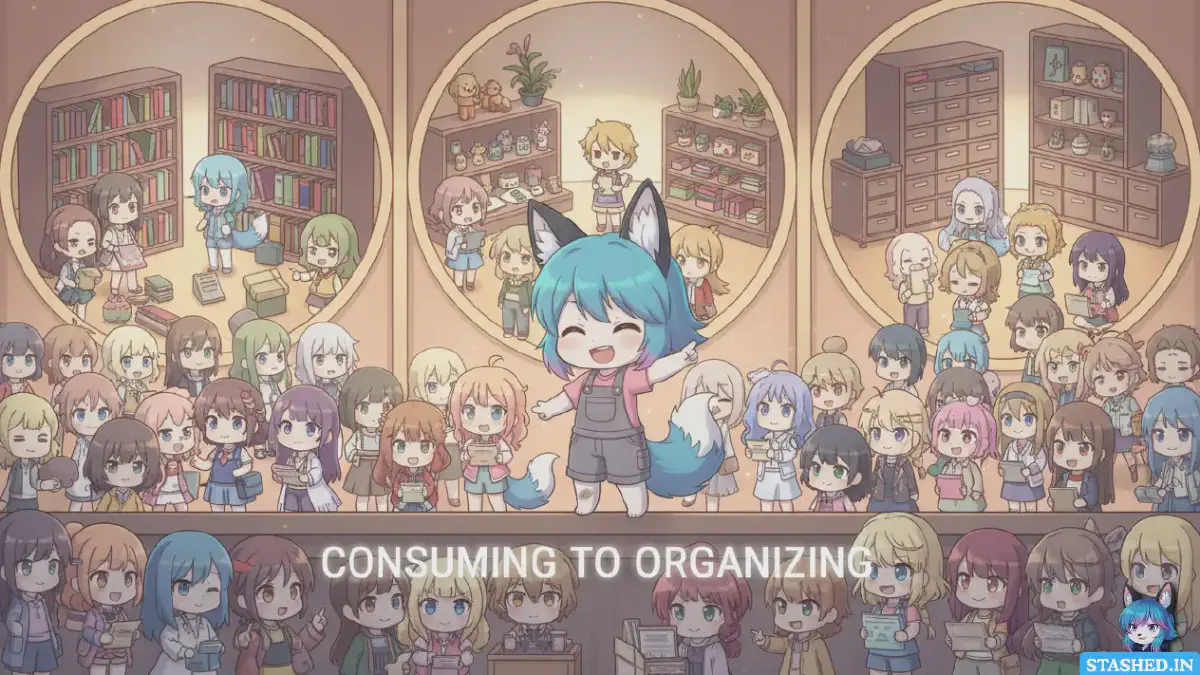
Something has shifted. We’re moving from an era of infinite consumption to an era of intentional curation. From passively scrolling to actively collecting. From overwhelming information overload to carefully built personal libraries.
The curation boom is here, and it’s changing how we interact with the internet.
What Curation Actually Means (And Why It Matters Now)#
Curation isn’t new. Museum curators have existed for centuries. Music curators created mixtapes in the 80s and playlists in the 2000s. But digital content curation is experiencing a renaissance.
Content curation is the act of discovering, organizing, and sharing digital content around specific themes or topics. But it’s more than just saving links. It’s about:
- Selecting what’s genuinely valuable from the ocean of mediocre
- Organizing content in ways that make it accessible and useful
- Adding context that explains why something matters
- Sharing collections that help others navigate information overload
The why-now is simple: we’re drowning. The average person encounters roughly 34 gigabytes of information daily, which is roughly 100,000 words. Nobody can process that. We’re overwhelmed, distracted, and increasingly unable to distinguish signal from noise.
Curation is the immune response. When the information environment becomes toxic, people start building filters. Personal collections become survival tools.
The Shift From Consumption to Curation#
For most of internet history, we’ve been consumers. Scroll, read, forget, repeat. Platforms optimized for engagement kept us in infinite feed loops. The goal was consuming more, faster, constantly.
That model is breaking down. Here’s what’s replacing it:
From Passive Scrolling to Active Building#
People are tired of being passive receptacles for content. Curation transforms you from consumer to creator. You’re building something, even if what you’re building is a collection of others’ work.
There’s pride in a well-curated collection. It represents your taste, judgment, and expertise. It’s a form of self-expression that consumption never was.
From Algorithmic Feeds to Personal Libraries#
Algorithms choose what you see based on engagement metrics, not value. They optimize for clicks and time spent, not for what actually helps you.
Personal curation flips this. You decide what’s worth keeping. You organize it around your needs, not an algorithm’s goals. You build a resource that serves you instead of serving advertisers.
From Disposable Content to Preserved Knowledge#
Social media treats everything as ephemeral. Yesterday’s viral post is today’s forgotten scroll. Nothing persists, nothing compounds.
Curation says “some things are worth keeping.” It’s an act of resistance against disposability. Personal collections become intellectual capital that appreciates over time.
From Individual Hoarding to Community Resources#
Early bookmarking was private and possessive. You saved things for yourself and never shared.
Modern curation is social. People build collections to help others. Shared curation creates commons where everyone benefits from collective knowledge work.
Why Everyone’s Suddenly a Curator#
The curation boom isn’t random. Several forces converged to make this moment inevitable:
Information Overload Hit Critical Mass#
We crossed a threshold where more content became actively harmful instead of helpful. When you can’t find anything in the flood, having less, better-organized content becomes valuable.
Studies show decision paralysis increases with options beyond 6-7 choices. The internet offers millions of options for everything. Curation reduces paralyzing choice to manageable selections.
Search Got Worse (Or Seems That Way)#
Google used to reliably surface the best answer. Now it’s SEO spam, AI-generated junk, and ads. Finding quality content through search alone is increasingly difficult.
Curated collections become more reliable than search. “Someone trustworthy already found and vetted this” beats “Google ranked this based on metrics I don’t understand.”
People Want to Build, Not Just Consume#
There’s a creativity crisis in knowledge work. Most jobs involve processing information, not creating things. People are starving for creative outlets.
Curation scratches that itch. It’s creative without requiring specialized skills. Anyone can curate. The barrier to entry is taste and effort, not talent or training.
Trust Shifted from Institutions to Individuals#
We trust personal recommendations more than editorial picks. Your friend’s Spotify playlist over a magazine’s best-of list. A Reddit user’s tool comparison over a corporate roundup article.
Personal curation leverages that trust. “I personally used and evaluated all these” carries more weight than “our algorithm selected these.”
Tools Finally Caught Up#
For years, bookmarking tools were terrible. Browser bookmarks haven’t meaningfully evolved since the 90s. Creating shareable, visual collections required technical skills most people didn’t have.
New tools (including Stashed.in, which I built specifically for this) make curation accessible. You don’t need to code. You don’t need design skills. You just need taste and the patience to organize.
Remote Work Made Knowledge Sharing Essential#
Distributed teams need shared knowledge repositories. You can’t tap someone on the shoulder to ask “where’s that article about X?”
Curated collections became workplace infrastructure. Teams that build and maintain shared resources operate more efficiently than those that don’t.
What People Are Curating (And Where)#
The curation boom manifests differently across communities and platforms:
Reddit’s “Awesome Lists”#
Reddit threads that collect and organize resources have become some of the most valuable content on the platform. r/Python’s resource thread. r/webdev’s learning paths. r/productivity’s tool comparisons.
These community-curated lists often surpass official documentation in usefulness because they include real user experience and context.
Twitter Lists and Bookmarks#
Twitter’s algorithmic timeline is chaos, but curated lists bring sanity. People build lists of thoughtful voices in specific domains. They bookmark threads worth remembering.
The most valuable Twitter accounts often curate more than they create original content. Being known for excellent curation can be more valuable than being witty.
Notion Dashboards and Databases#
The Notion template economy is basically a curation economy. People build elaborate dashboards organizing resources, then share or sell them.
“My reading list,” “My productivity system,” “My design resources” are all exercises in public curation that double as personal brand building.
YouTube Playlists#
The shift from individual videos to curated playlists reflects this trend. People creating “Learn Web Development in 2024” playlists are curating, not just linking.
The best YouTube education often comes from curated playlists that sequence content better than individual creators.
Personal Websites and Digital Gardens#
The “digital garden” movement is fundamentally about curation. People building personal websites that collect and interconnect resources they’ve found valuable.
These aren’t just blogs. They’re living collections that grow and evolve over time, organized around the curator’s interests and perspective.
Visual Boards (Pinterest, Are.na, Stashed.in)#
Visual curation platforms are exploding because they match how many people naturally organize information. Instead of hierarchical folders, you get spatial, visual collections.
I built Stashed.in specifically for this: visual link collections that work like Pinterest boards but for any type of content. Each stash has a header image, saved links show preview cards, and the whole thing is designed for browsing rather than just searching.
The visual aspect matters because it makes curation feel creative rather than administrative. You’re not filing paperwork; you’re building something aesthetically coherent.
How to Join the Curation Movement#
If you’re feeling inspired to start curating, here’s how to begin:
Pick One Topic You’re Passionate About#
Don’t try to curate everything. Pick one subject where you already consume content regularly and have developed taste.
Maybe it’s productivity tools. Or sustainable fashion. Or mechanical keyboards. Or sci-fi novels. Something you genuinely care about and engage with anyway.
Start Collecting Without Overthinking Organization#
Begin by just saving things you encounter that feel valuable. Don’t worry about perfect categorization yet. Build volume first.
Use whatever tool feels natural. Stashed.in if you want visual organization. Notion if you want structure. Raindrop if you want power features. The tool matters less than the habit.
Add Context to Everything#
The difference between hoarding and curating is context. When you save something, write one sentence about why it’s valuable.
“Best explanation of React hooks I’ve found. Beginner-friendly with clear examples.”
That context is what makes your collection useful to future-you and others.
Organize Around Use Cases, Not Categories#
Instead of organizing by topic alone (“Design,” “Code,” “Writing”), organize by purpose:
- “Resources for beginners”
- “Advanced deep dives”
- “Quick reference materials”
- “Inspiration when stuck”
Purpose-based organization makes collections more useful because it matches how people actually use them.
Share Early, Share Often#
Don’t wait until your collection is “ready.” Share works-in-progress. Post collections while they’re still growing.
Sharing does two things: it helps others, and it motivates you to maintain and improve the collection. Public curation is better curation.
Make It Visual#
Whenever possible, use visual organization. Choose header images for collections. Ensure preview images display properly. Think about the aesthetic experience of browsing your collection.
Visual appeal matters because it affects whether people (including you) actually engage with the collection or let it become another forgotten archive.
Curate Regularly, Not Perfectly#
Set aside 15 minutes weekly to add new finds and prune outdated content. Regular maintenance beats perfect organization done once and never updated.
The best collections are living documents, not finished products.
The Business of Curation (Yes, It’s Real)#
What started as personal hobby is becoming professional practice. People are building businesses around curation:
Paid Newsletters#
Substack is full of curators who charge for their selections. They read widely, select the best, add commentary, and send curated digests to subscribers.
Not creating original research, just curating existing knowledge. And people pay for it because quality curation saves time and surfaces things they’d miss.
Template and Resource Marketplaces#
People sell Notion templates, Airtable bases, and resource collections. What they’re really selling is curation: “I organized this so you don’t have to.”
A well-curated resource collection can be worth $50-200 to someone who needs it.
Community Curation Platforms#
Platforms are being built specifically for collective curation. Tools where communities can build and maintain shared knowledge repositories.
The value isn’t the platform itself but the curated content communities create on it.
Expertise Signaling#
Even without direct monetization, public curation builds professional reputation. Being known for excellent collections in your field leads to consulting work, speaking opportunities, and job offers.
Curation is becoming resume material. “Maintains the definitive collection of X resources used by thousands” is a professional credential.
The Dark Side of Curation Culture#
Let’s be honest about the downsides:
Curation as Procrastination#
Some people spend more time organizing resources than using them. Building the perfect productivity system instead of being productive. Curating learning materials instead of learning.
Collection for its own sake is just elaborate procrastination.
The Completeness Trap#
Trying to create comprehensive collections leads to burnout and bloated, unusable resources. Comprehensive isn’t the goal. Useful is.
Better to have 20 excellent, well-contextualized resources than 200 mediocre ones saved “just in case.”
Curation Theater#
Public curation can become performative. Collecting impressive-looking resources you haven’t actually engaged with to appear knowledgeable.
Real curation comes from genuine engagement. Saving things you’ve used, read, or learned from. Not just impressive links you want associated with your personal brand.
The Attention Economy of It All#
Even curation feeds into attention capitalism. Platforms benefit when you spend time organizing content on their sites. They’re still monetizing your attention and data.
Being aware of this doesn’t mean don’t curate. Just don’t mistake it for rebellion against the attention economy. You’re still participating, just differently.
What This Means for the Future of the Internet#
The curation boom signals larger shifts:
From Platforms to Protocols#
People are building personal infrastructure that’s portable across platforms. Collections that belong to them, not to whatever service they’re using.
This creates pressure for interoperability and data portability. Users won’t accept lock-in to platforms that prevent export.
From Algorithmic Feeds to Human Filters#
We’re seeing renewed appreciation for human curation over algorithmic selection. The algorithm can serve you content, but a person can explain why it matters.
This doesn’t mean algorithms disappear, but human-curated recommendations gain value relative to algorithmic ones.
From Closed to Open Knowledge#
The best curation is shared curation. Collections become resources that entire communities benefit from and contribute to.
This creates commons of knowledge that resist platform lock-in and corporate control.
From Passive to Active Internet Use#
Curation makes internet use active rather than passive. You’re building something, even if incrementally. Your digital life accumulates value instead of just consuming time.
This shift toward agency and creation (even through curation) is psychologically healthier than passive consumption.
Your Role in the Curation Boom#
You don’t have to become a professional curator. But you can participate in this shift from consumption to curation in small ways:
Save intentionally instead of reflexively. Ask “is this worth keeping?” not “might I want this someday?”
Add context to what you save. One sentence explaining why something mattered to you.
Organize visually when you can. Leverage spatial memory and visual thinking.
Share generously. When you’ve built something useful, make it available to others.
Curate collaboratively. Build collections with teammates, classmates, or communities rather than just individually.
Maintain actively. Regular small touches beat occasional massive reorganizations.
The curation boom isn’t about everyone becoming an internet librarian. It’s about shifting from passive consumer to active architect of your information environment.
Every time you intentionally save, organize, and share something valuable, you’re participating. Every personal collection is a small act of resistance against information overload and algorithmic control.
Start Your Collection Today#
Here’s the truth: you’re already consuming information. You already encounter valuable things. The question is whether you’re building anything with them or letting them flow past and disappear.
Start small. Create one collection around one topic you care about. Use Stashed.in if you want visual organization. Use whatever tool feels natural if you don’t.
Save 10 things this week with context about why each matters. Organize them in a way that makes sense to you. Share the collection with one person who might find it useful.
That’s it. You’re now a curator.
The internet has too much content and not enough context. Too much noise and not enough signal. Too much consumption and not enough creation.
Curation bridges these gaps. It transforms overwhelming abundance into useful collections. It turns passive scrolling into active building. It makes you an architect of your information environment instead of just another consumer.
The curation boom is happening because people are tired of drowning and ready to start swimming.
Join them. Start curating. Build something worth sharing.
Your future self will thank you. And so will everyone who benefits from what you’ve collected.